~1.2 Million Dogs Are Killed on American Roads Every Year. Here's What Their Owners Wish They'd Done Differently.
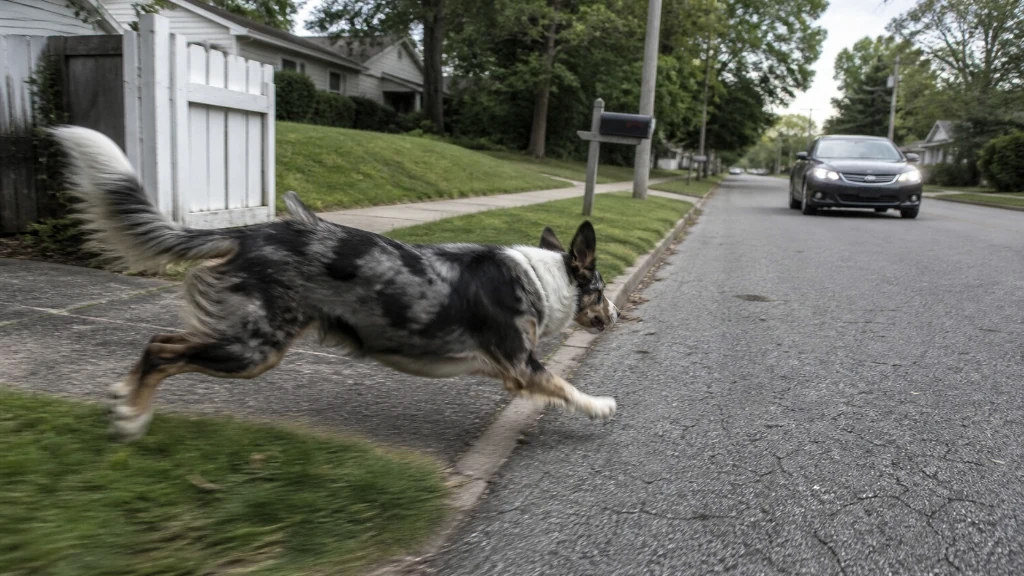
Every dog owner knows the jolt of watching their dog bolt toward the street, and it isn't paranoia. An estimated 1.2 million dogs are killed on American roads every year, and many of them were somebody's pet. And it's far more preventable than most owners realize.

The sound that no dog owner wants to hear.
The jingle of a collar tag moving too fast toward the street, and the scrabble of nails on asphalt that tells you your dog is no longer in the yard.
And then it comes. Brakes locking. Tires skidding. A thud.
It happens faster than you can react, faster than you can call their name, and faster than your legs can carry you to the end of the driveway to grab them.
It takes less than three seconds for a dog to clear the grass and get into the road. At 35 miles per hour, a driver doesn't even have time to touch the brakes.
Every year, an estimated 1.2 million dogs are killed on American roads. Roughly 3,200 per day, in accidents drivers never saw coming.
These were dogs whose owners would tell you, hand on heart, "My dog would never run into the road."
Until they did.
Emergency Vets See It Every Week
Dr. Brooke Smith, a veterinary resident instructor at the Texas A&M College of Veterinary Medicine, noted that the Texas A&M Small Animal ER sees at least three to five animals hit by cars every single week. That's just one vet hospital.
Beyond the heartbreak, treating vehicular trauma is devastatingly expensive. Emergency surgery and stabilization routinely run between $6,000 and $12,000, with no guarantees.
That's what a split-second bolt toward the street can cost a family.
What Every Dog Owner Wants to Believe
"My dog knows our yard. She would never run into the road."
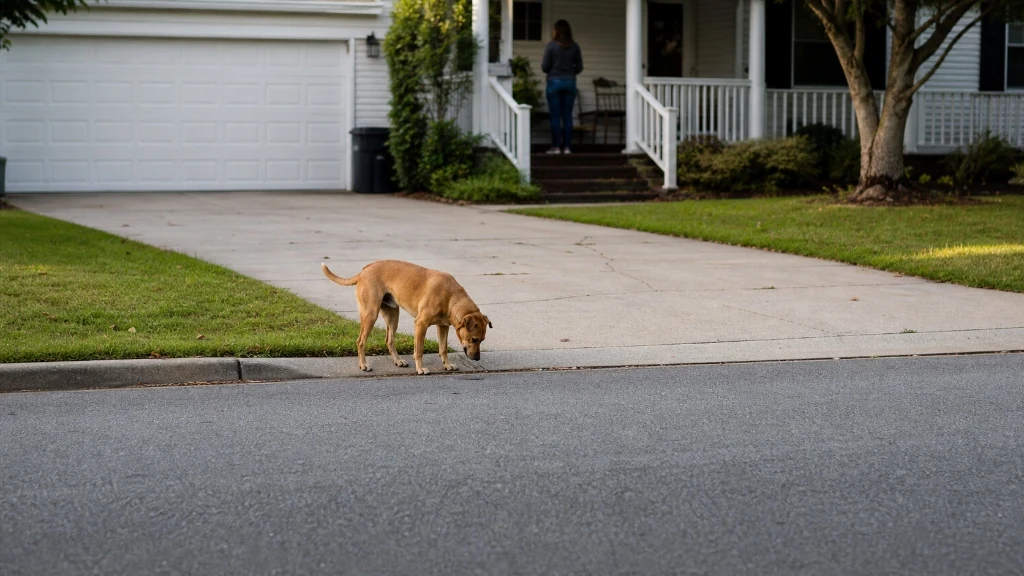
Dogs can't assess traffic speed. They don't understand what a road is. They don't weigh the consequences of chasing a rabbit across two lanes of traffic versus staying in the yard. A dog is 30 to 80 pounds of instinct, prey drive, and impulse. When a trigger fires, everything you've ever trained them can go silent.
The squirrel that crosses the street. The neighbor's dog that barks from three houses away. The kid on a bicycle. The fireworks on the Fourth of July. The thunder crack in August. Any of these can override a decade of obedience training in less than a second.
And the question isn't whether your dog would ever bolt. The question is: when that moment comes, what's standing between your dog and the car traveling at 35 mph?
For most owners who live near a street, the honest answer is a chain-link fence with a gate that doesn't always latch, or a voice their dog may or may not listen to under pressure.
Why the Obvious Solutions Don't Always Prevent This
"Just build a fence."
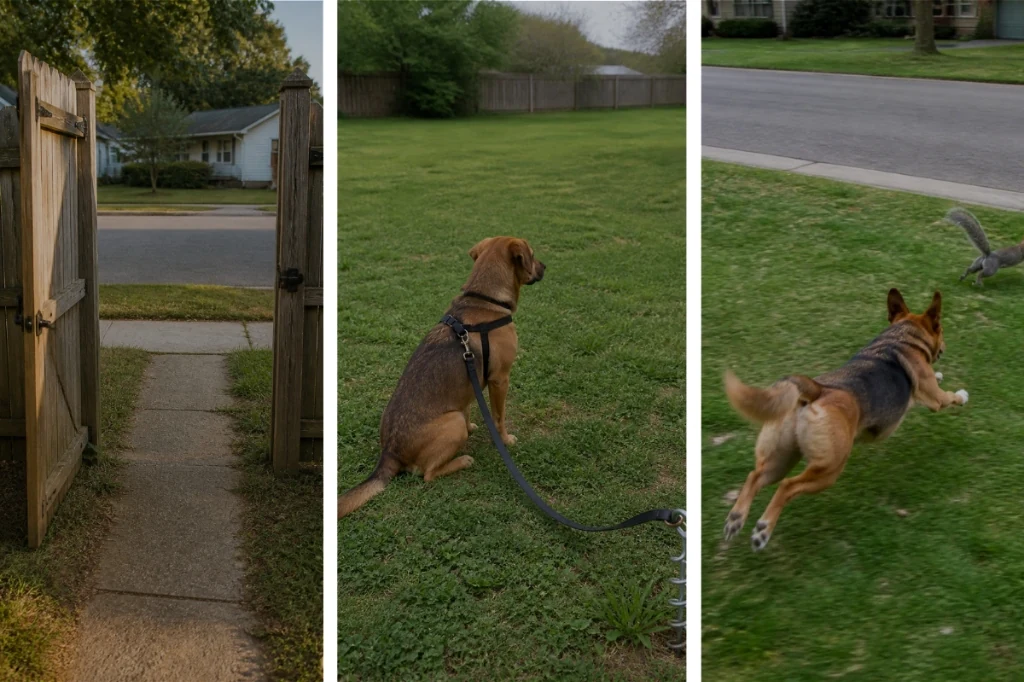
Physical fences cost tens of thousands of dollars, and they still fail the moment a delivery driver or kid leaves the gate open. It's an expensive barrier that still has gaps.
"Just keep them on a leash."
A dog staked in a yard staring at space they can't use isn't exercise, and it isn't freedom. It's confinement on a string.
"Just train them better."
No dog has perfect recall 100% of the time. When prey drive kicks in, you need a boundary that holds, not a voice they might ignore.
What If There Was an Invisible Boundary Your Dog Could Learn?
A growing number of dog owners are discovering an alternative, and it's not an expensive fence, tether, or training course.
It's a GPS boundary, built by PawTronic.
You set a custom line on your phone using a real map of your property, and your dog wears it on their collar. When they approach the line, they hear a tone. If they keep going, they feel a vibration. The collar delivers a clear, layered signal that teaches your dog exactly where the yard ends and the road begins. Not through pain, but through a consistent, learnable cue.
And it can be the difference between constant worry and a dog that gets to roam freely.

How It Actually Works
The PawTronic Pro Series 2 lets you map your exact property boundaries through a linked app. Rather than forcing you into a basic circle, you can customize an 8-sided perimeter that hugs your yard, driveway, and property edge where it meets the road.
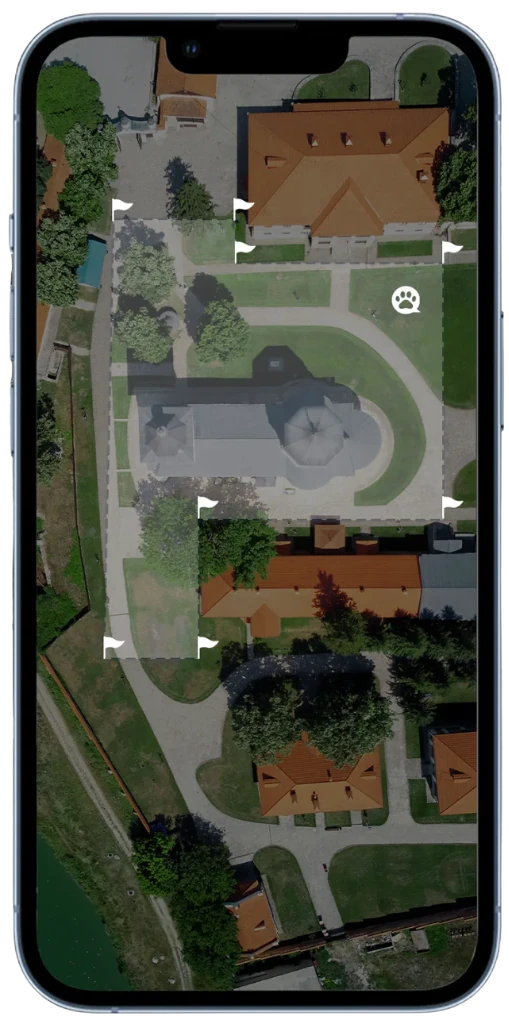
When your dog approaches the boundary you set, the collar responds with three layered alert levels:
- Level 1: Tone. An audible warning your dog learns to recognize.
- Level 2: Vibration. A physical cue that reinforces the boundary.
- Level 3: Static correction. A mild static signal for dogs that need a firmer boundary.
PawTronic recommends that smaller or younger dogs start on alert levels 1–2, which many owners find is all their dog ever needs.
The Choice Comes Down to This
You can build a $20,000 fence that your kid can leave open. You can clip a leash and stand there holding it every time your dog goes outside. You can hope your dog never bolts toward the road, and count on being right every single time.
Or you can set a perimeter that doesn't depend on luck, leashes, or a latched gate.
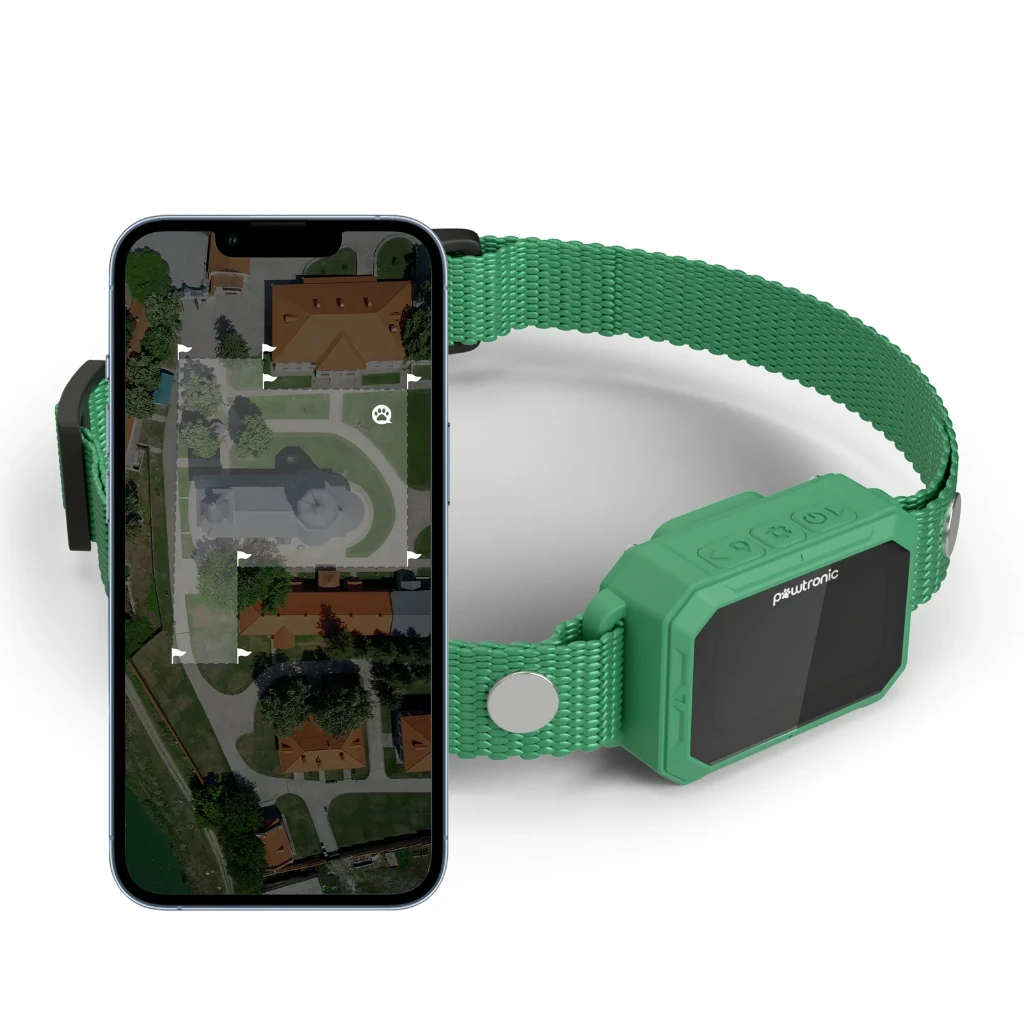
- Custom 8-sided boundary — set via Google Maps
- 3 alert levels — tone, vibration, static
- No monthly subscription — one-time purchase
- IPX7 waterproof — rain, mud, puddles
What PawTronic Customers Are Saying
"It was a bit more expensive than I expected, but I can keep my dog out of the road and off my neighbors' property. I was looking for a collar that gave her more room to run on our 4 acres, and not just in a circular area, so I love that I can set a hexagonal fence with this one. The only drawback is that the battery doesn't last as long as I want, it has to be charged daily, other than that, it's a dependable device. And i like the fact that I can use the remote to help train her to not jump on people, and to keep her away from cars entering our driveway, win win!"
"Using the pro series 2 on my two dogs (smaller dogs 18-20 pounds each) and they work pretty well... I use just the sound and vibration notification and it is enough to stop them at the boundary and turn around... Overall, I am very happy with the purchase as I just wanted something to have a hard stop for my dogs when getting to the boundaries to keep them from wandering off and stay out of my neighbors yards. A few app issues but I can easily overlook for not having a monthly service fee, as the collar does what it needs to do. Worth the investment."
"I live on a farm with a hike/bike trail through it. I rescued a new dog that unfortunately loves to run with bicycles. I purchased the PawTronic Pro Series 2. Marked off a perimeter that includes approximately 75 acres and it is working very well. He gets plenty of exercise. He ran 8.8 miles and 7.6 miles the last two days.Im very happy with the purchase."
"It works great. My 3 large dogs learned their perimeter in about a week. I have two, quite wooded acres so I was slightly skeptical about the boundaries working properly but it works as I had hoped it would. The remote beep and vibrate alert has helped with recall if they're not ready to come back in for the evening. I have not even had to use the static feature. I would recommend purchasing."
"Works perfectly for a lightly wooded 2 acres or bigger property.Took about 2 days for dogs to fully learn. Did not work as well for a wooded 1/2 acre property due to GPS drift."
"I have 3 dogs. Doberman (90lbs) male, beagle (30lbs) male, and lab (60lbs) female. All the dogs have adjusted well to using these with some training. I love these collars. We can take our dogs anywhere and just draw a fence on the phone and not have to worry. Ive been using these about 8 months now. They work great. I love having the remotes as a trainer also. The battery life is great too. Definitely recommend these collars."
Frequently Asked Questions
The collar starts with the gentlest signal, not the strongest. Level 1 is an audible tone and Level 2 is a vibration — PawTronic recommends smaller or younger dogs start on levels 1–2, and many owners find tone and vibration alone is all their dog ever needs. As one verified owner, Dustin, put it: "I use just the sound and vibration notification and it is enough to stop them at the boundary and turn around." The static level is a mild signal for dogs that need a firmer boundary — a cue, not a punishment.
Most of the work happens in the first few days. One owner reported it "took about 2 days for dogs to fully learn" the boundary — wearing the collar, approaching the line, hearing the tone, and turning around. Consistency matters more than clock time: the more reps in those first days, the faster it clicks.
No. There's no buried wire, no trench, and no construction crew. You set the boundary yourself in the Linked Paw app by drawing it on Google Maps over your actual property — an 8-sided shape that follows your yard, your driveway, and the edge where it meets the road. Want to change it later? You just redraw it in the app.
No. The PawTronic Pro Series 2 is a one-time purchase with no monthly subscription.
GPS boundaries work best on open or lightly wooded land. One owner reported strong results across two-plus acres of lightly wooded property — but on a densely wooded half-acre lot, the same system showed some GPS drift. If your yard is small and heavily tree-covered, it may not be the right fit. The collar also needs daily charging, and the app can take 30–60 seconds to connect outside of Bluetooth range. We'd rather you know that before you buy than be surprised after.
The collar is IPX7 waterproof, so rain, mud, and puddles are no problem. It charges daily — most owners fold it into a routine, like charging overnight or while the dog is inside. It fits necks from 8 to 27 inches.